

 Munich Security Conference
  China's Population Decline and Robots
  Israel disregards the law.
  The US Department of Homeland Security has begun a partial shutdown.
  Violent Anti-Government Protests in Tirana
  China Showcases AI-Driven Healthcare Innovations at World Health Expo Dubai
  US Military Strikes Suspected Drug Boat in Pacific, Two Killed
  North Korea’s Kim Jong Un Says Military’s Fighting Front Will Expand
  Ambulance Helicopter Crashes at Military Base in Libya
  Two Residential Buildings Collapse in Lebanon’s Tripoli, At Least Six Dead
Turkish Defense Industry Naval Forces
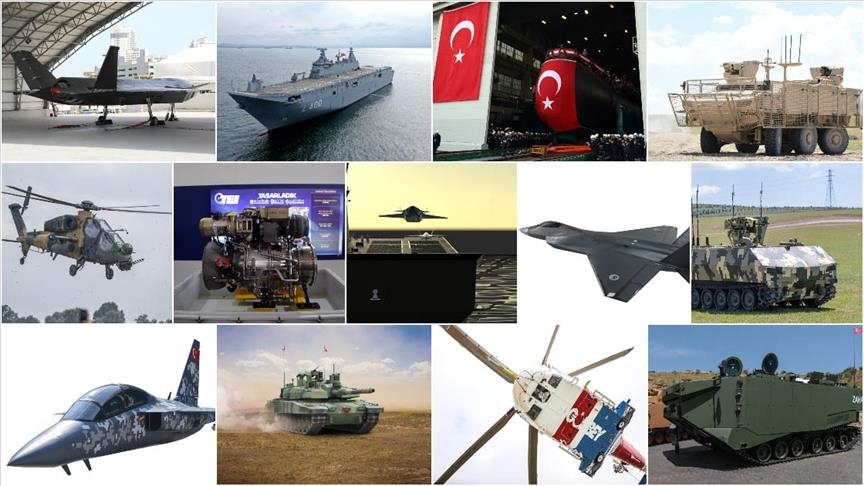
Turkey’s Indigenous Air Platforms Expand Strategic Defence Capabilities
Turkey is accelerating the development of indigenous air platforms as part of its long-term defence modernisation strategy. From fighter aircraft and unmanned aerial vehicles to helicopters and advanced training jets, domestically produced systems are reshaping Turkey’s air power doctrine and export profile.
Strategic Shift Toward Indigenous Air Power
Over the past decade, Turkey has prioritised self-sufficiency in aerospace technologies to reduce external dependency and ensure operational continuity. This strategic shift has resulted in a broad portfolio of air platforms designed, developed and produced by Turkish defence and aviation companies.
Local production now covers airframes, avionics, mission computers, radar systems, propulsion components and precision-guided munitions.
Fighter Aircraft and Next-Generation Projects
The centrepiece of Turkey’s future air combat capability is the National Combat Aircraft programme, aimed at delivering a next-generation, multi-role fighter with advanced stealth and sensor fusion features.
Designed to operate in high-threat environments, the aircraft is expected to integrate indigenous radar, electronic warfare suites and air-to-air as well as air-to-ground weapon systems, positioning Turkey among a limited group of countries with advanced fighter development capacity.
Unmanned Aerial Vehicles as Force Multipliers
Unmanned aerial vehicles (UAVs) represent one of the most visible success stories of Turkey’s defence industry. Armed and unarmed UAVs are now widely deployed for intelligence, surveillance, reconnaissance and precision strike missions.
These platforms have introduced new operational concepts, enabling persistent presence, reduced operational costs and lower risk to personnel. Turkish UAVs are increasingly integrated with network-centric warfare systems and real-time data-sharing architecture.
Advanced Training and Light Combat Aircraft
Turkey has also invested in advanced jet trainers and light combat aircraft to support pilot training and operational readiness. These platforms bridge the gap between basic flight training and frontline fighter operations.
Equipped with modern avionics and mission systems, training aircraft contribute to a sustainable and fully domestic pilot training pipeline.
Rotary-Wing Platforms and Tactical Mobility
Indigenous helicopter programmes form a critical component of Turkey’s air mobility and close support capabilities. Utility, attack and maritime helicopters are designed to perform a wide range of missions, including troop transport, close air support, reconnaissance and search-and-rescue operations.
High-altitude performance, hot-weather capability and modular weapon integration are key design priorities for these platforms.
Indigenous Sensors, Weapons and Avionics
Beyond airframes, Turkey has made significant progress in airborne sensors and weapons integration. Domestically developed radar systems, electro-optical payloads and electronic warfare suites are increasingly used across multiple platforms.
Indigenous precision-guided munitions, cruise missiles and air-to-air missiles form a critical part of Turkey’s layered air combat doctrine.
Export Growth and International Interest
Turkey’s air platforms have attracted growing demand from international markets. UAVs, training aircraft and helicopters have been exported to multiple regions, strengthening Turkey’s position as an emerging aerospace exporter.
Defence officials highlight that exports are accompanied by technology transfer, training and long-term maintenance packages, reinforcing strategic partnerships.
Future Outlook
With ongoing investments in sixth-generation concepts, artificial intelligence-enabled systems and space-based integration, Turkey’s aerospace roadmap extends beyond conventional air power.
As indigenous capabilities mature, Turkey is expected to play an increasingly influential role in regional air security and the global defence aviation market.