
 Munich Security Conference
  China's Population Decline and Robots
  Israel disregards the law.
  The US Department of Homeland Security has begun a partial shutdown.
  Violent Anti-Government Protests in Tirana
  China Showcases AI-Driven Healthcare Innovations at World Health Expo Dubai
  US Military Strikes Suspected Drug Boat in Pacific, Two Killed
 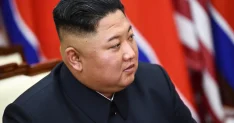 North Korea’s Kim Jong Un Says Military’s Fighting Front Will Expand
  Ambulance Helicopter Crashes at Military Base in Libya
  Two Residential Buildings Collapse in Lebanon’s Tripoli, At Least Six Dead
Senior Russian Military Official Shot in Moscow
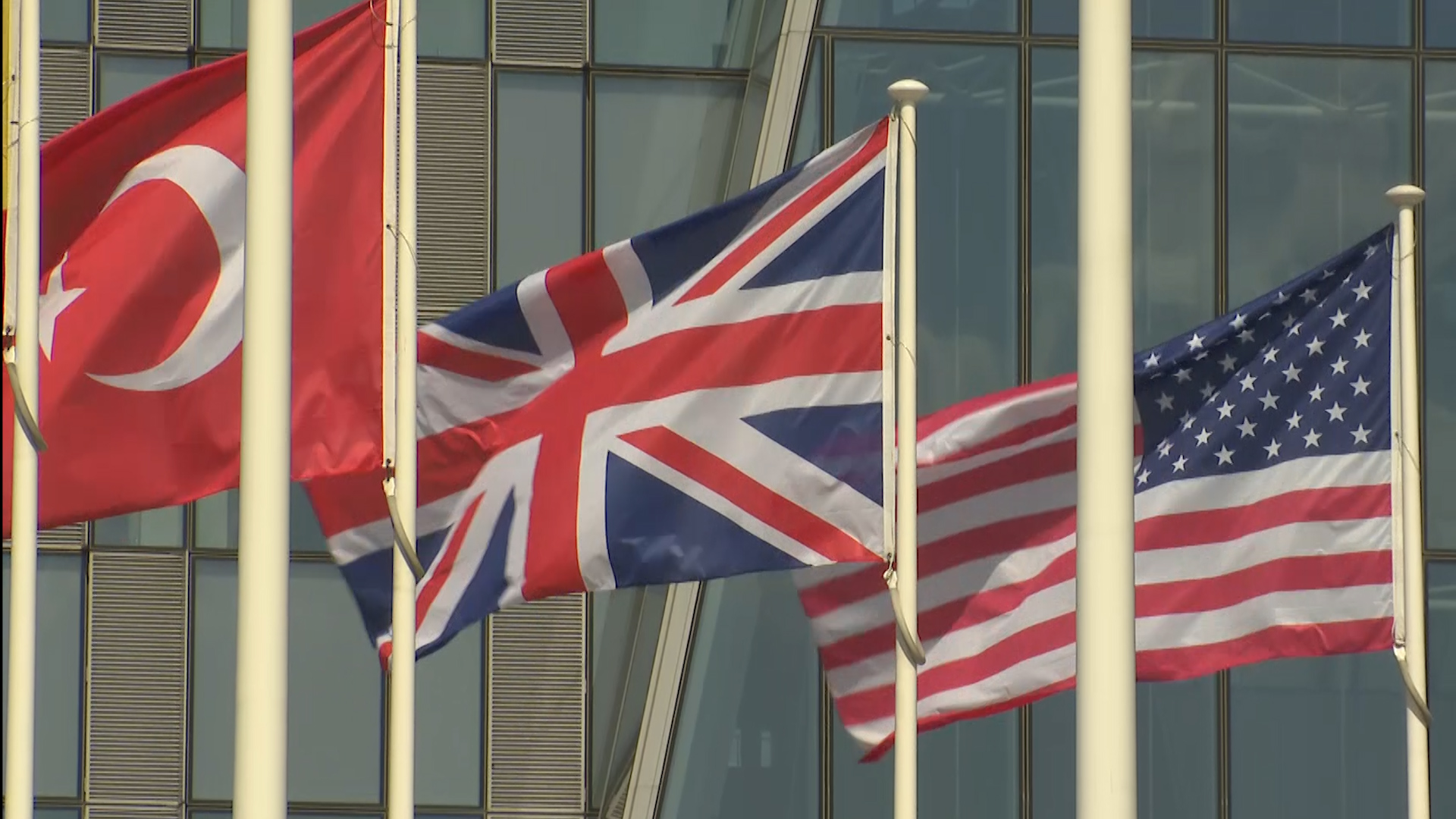
A New Power Balance: NATO, the US, Türkiye and the UK
Spot: Under President Donald Trump, the United States is reshaping NATO’s internal balance, signalling a shift toward a smaller core of militarily capable allies — with Türkiye and the United Kingdom emerging as central pillars.
A significant transformation is underway within NATO’s strategic architecture. While the alliance continues to project unity, internal dynamics are evolving rapidly. At the heart of this shift stands a clear message from Washington under President Donald Trump: military capability, not political symbolism, will define influence.
Trump’s position is driven by a long-standing and now operational belief that American taxpayers should no longer shoulder the primary burden of European security. According to assessments reviewed by news.bbchaber.com, this stance is no longer rhetorical but increasingly reflected in defence planning and alliance priorities.
Trump’s doctrine: taxpayers, power and responsibility
President Trump has made it explicit that the United States spends vast sums defending Europe while many NATO members fail to meet even basic defence commitments. In his view, American citizens are funding security guarantees for countries that lack both sufficient military readiness and political urgency.
This frustration has translated into a strategic recalibration. Rather than questioning NATO’s existence, the Trump administration is redefining what meaningful alliance membership looks like — emphasising deployable forces, modern equipment and combat readiness.
The United States: global power with selective engagement
The US military remains the most powerful force in the world, with unmatched global reach, intelligence dominance and logistical depth. However, the Trump administration has signalled that this power will be used more selectively, prioritising partnerships with allies capable of contributing decisively in high-intensity conflicts.
Washington’s strategic planners increasingly assess allies not by diplomatic alignment but by their ability to fight, sustain and adapt in modern warfare environments.
Türkiye: NATO’s most operationally active force
Türkiye has emerged as one of NATO’s most militarily relevant members. Possessing one of the alliance’s largest standing armies, it also stands out for its extensive real-world combat experience across multiple operational theatres.
Turkish forces have demonstrated adaptability in drone warfare, electronic systems and hybrid conflict scenarios. Ankara’s expanding defence industry, marked by increasing self-sufficiency, allows Türkiye to modernise without excessive reliance on external suppliers.
From Washington’s perspective, Türkiye represents a rare combination of manpower, experience, geography and industrial capability — a profile that aligns closely with Trump’s emphasis on tangible military value.
The United Kingdom: Washington’s strategic anchor in Europe
The United Kingdom remains Europe’s most capable military power alongside France, but with a closer operational and intelligence relationship with the United States. Britain’s nuclear deterrent, advanced naval forces and expeditionary doctrine reinforce its role as Washington’s primary European military partner.
Under the Trump administration, the UK’s emphasis on interoperability and rapid deployment has gained renewed importance, positioning London as a key bridge between US power and European security.
Why much of Europe is being sidelined
Despite technological sophistication, many European NATO members struggle with readiness, manpower shortages and limited stockpiles. Years of underinvestment have reduced their ability to sustain prolonged, high-intensity operations.
Trump’s approach reflects a growing consensus in Washington: Europe’s defence challenge is not political will alone, but structural military weakness. This reality has diminished the strategic weight of countries unable to contribute meaningful combat power.
A de facto “core three” within NATO
Analysts suggest that NATO is moving toward an informal hierarchy. While the alliance remains broad in membership, its effective military backbone increasingly rests on three forces: the United States, Türkiye and the United Kingdom.
This “core three” model is not a formal alliance within NATO, but a functional reality — shaping contingency planning, force posture and operational coordination.
Key questions and answers
Is President Trump weakening NATO?
No. The alliance remains intact, but Trump is redefining influence within NATO around capability and contribution.
Why is Türkiye central to this strategy?
Türkiye combines scale, combat experience, strategic geography and an increasingly independent defence industry.
What makes the UK indispensable?
Its nuclear deterrent, intelligence integration and expeditionary mindset align closely with US strategic priorities.
What does this mean for other European states?
Countries may face increased pressure to invest in defence or accept reduced influence in strategic decision-making.
Could this lead to a smaller NATO?
Formally no, but operational leadership may become increasingly concentrated among capable militaries.
Strategic implications ahead
bbc news–style analysis indicates that NATO’s future will be shaped less by consensus declarations and more by operational reality. President Trump’s emphasis on fairness, cost-sharing and military effectiveness is accelerating this transition.
For the United States, this approach seeks to protect taxpayers while preserving global leadership. For Türkiye and the United Kingdom, it offers expanded influence grounded in demonstrated military capability.
news.bbchaber.com will continue to follow developments shaping NATO’s evolving power structure.