

 Munich Security Conference
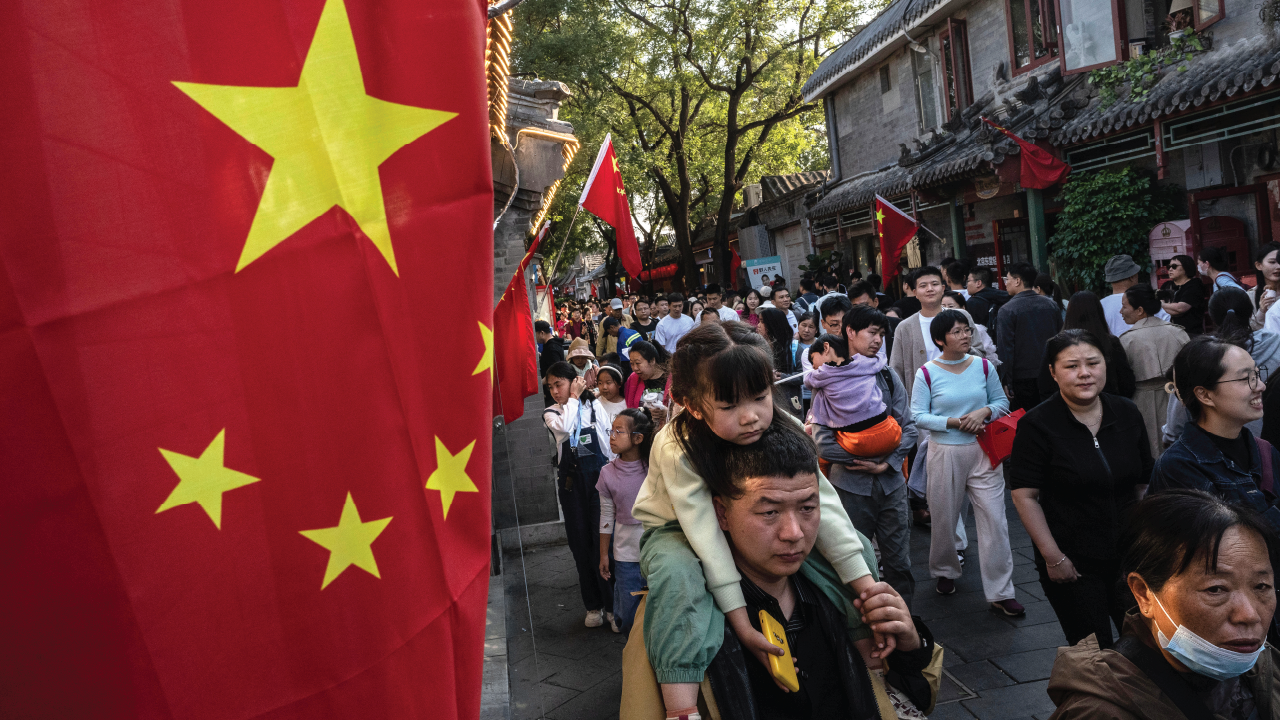
  China's Population Decline and Robots
  Israel disregards the law.
  The US Department of Homeland Security has begun a partial shutdown.
  Violent Anti-Government Protests in Tirana
  China Showcases AI-Driven Healthcare Innovations at World Health Expo Dubai
  US Military Strikes Suspected Drug Boat in Pacific, Two Killed
 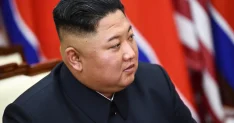 North Korea’s Kim Jong Un Says Military’s Fighting Front Will Expand
  Ambulance Helicopter Crashes at Military Base in Libya
  Two Residential Buildings Collapse in Lebanon’s Tripoli, At Least Six Dead
Armed Robbers Target Armored Cash Vehicle in Italy
China in Focus: Power, Pressure and a Redefined Global Order
China is reshaping the global system through trade dominance, military expansion, technological ambition and assertive diplomacy. As the world’s second-largest economy, Beijing’s strategic choices now influence global stability, markets and security calculations far beyond Asia.
1. Trade: China’s Central Role in Global Commerce
China remains the backbone of global trade, acting as the world’s largest exporter and a critical node in nearly every major supply chain. Despite efforts by Western economies to diversify away from China, its manufacturing scale and logistical efficiency remain difficult to replicate.
Beijing has increasingly framed trade as a strategic instrument. Export controls, market access policies and currency management are now closely aligned with geopolitical objectives.
BBC News analysis suggests that global trade fragmentation has not reduced China’s importance but has instead made economic interdependence more politically sensitive.
2. Manufacturing Power and Supply Chain Leverage
China’s manufacturing ecosystem extends from basic components to high-end industrial systems. State support, infrastructure depth and labour specialisation have allowed China to dominate sectors ranging from electronics to green technologies.
As countries seek supply chain resilience, China is adapting by moving up the value chain rather than retreating.
From a bbchaber.com perspective, China’s manufacturing power is no longer just economic—it is strategic leverage.
3. Defence Industry and Military Expansion
China’s defence industry has undergone rapid modernisation, producing advanced naval platforms, missile systems and aerospace capabilities. Military reforms aim to transform the People’s Liberation Army into a force capable of operating far beyond China’s borders.
Defence production is closely tied to technological innovation, with civil-military integration accelerating development.
BBC defence correspondents note that China’s military growth is altering regional balances from the South China Sea to the Western Pacific.
4. Strategic Deterrence and Nuclear Modernisation
China is expanding and modernising its nuclear forces, moving away from a minimal deterrence posture toward a more diversified arsenal.
This shift reflects Beijing’s assessment of growing strategic competition with the United States.
Global arms control experts warn that China’s trajectory complicates existing nuclear stability frameworks.
5. Technology, AI and Digital Governance
China views technology leadership as central to national power. Heavy investment in artificial intelligence, quantum computing and semiconductor development aims to reduce reliance on foreign suppliers.
Beijing also promotes alternative digital governance models, emphasising state oversight and data sovereignty.
BBC News reporting highlights that technological competition has become one of the most consequential fronts in US–China rivalry.
6. Health, Biotechnology and Pandemic Legacy
China’s health sector has expanded rapidly, with major investment in biotechnology, vaccine development and pharmaceutical manufacturing.
The legacy of the Covid-19 pandemic continues to shape global perceptions and health diplomacy.
From bbchaber.com analysis, health has become both a vulnerability and a soft-power tool for Beijing.
7. Energy Strategy and Climate Calculations
China is the world’s largest energy consumer and carbon emitter, yet also the largest investor in renewable energy.
Beijing balances climate commitments with energy security, maintaining coal capacity while scaling solar, wind and nuclear power.
BBC climate analysts note that China’s energy decisions will largely determine the success or failure of global climate goals.
8. Foreign Policy: Assertive Diplomacy and Strategic Messaging
China’s foreign policy has become more assertive, often described as “wolf warrior diplomacy.” Beijing increasingly challenges Western narratives and institutions.
At the same time, China presents itself as a champion of the Global South, offering infrastructure investment and development financing.
This dual approach has expanded China’s influence while deepening geopolitical divisions.
9. Relations with the United States: Systemic Rivalry
US–China relations have evolved into a systemic rivalry encompassing trade, technology, military power and ideology.
Both sides are attempting to manage competition without direct conflict, but mutual mistrust remains high.
BBC News assessments suggest this rivalry will define international relations for decades.
10. Taiwan, Regional Security and Flashpoints
Taiwan remains the most sensitive issue in China’s external relations. Military exercises and political pressure have increased around the island.
Regional allies and partners view Taiwan as a potential trigger for wider conflict.
From a bbchaber.com standpoint, Taiwan is the single most destabilising variable in East Asian security.
11. Belt and Road Initiative and Global Influence
China’s Belt and Road Initiative continues to reshape infrastructure and connectivity across Asia, Africa and parts of Europe.
While projects have expanded China’s reach, concerns over debt sustainability and political influence persist.
BBC News analysis frames BRI as both an economic network and a geopolitical strategy.
12. Domestic Economy, Demographics and Internal Pressure
China faces slowing growth, demographic decline and rising internal economic pressure.
Structural reforms, innovation and social stability are increasingly intertwined challenges for the Chinese leadership.
Global markets closely watch China’s domestic health, recognising its systemic impact.
Conclusion
China’s rise is no longer a future scenario—it is a present reality shaping global systems.
From trade and technology to defence and diplomacy, Beijing’s actions are redefining power relationships worldwide. How China balances ambition, stability and confrontation will be one of the defining questions of the modern era.