
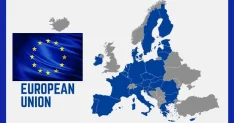
 Munich Security Conference
 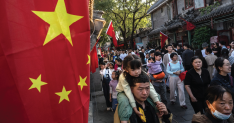 China's Population Decline and Robots
  Israel disregards the law.
  The US Department of Homeland Security has begun a partial shutdown.
  Violent Anti-Government Protests in Tirana
  China Showcases AI-Driven Healthcare Innovations at World Health Expo Dubai
  US Military Strikes Suspected Drug Boat in Pacific, Two Killed
 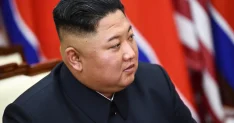 North Korea’s Kim Jong Un Says Military’s Fighting Front Will Expand
  Ambulance Helicopter Crashes at Military Base in Libya
  Two Residential Buildings Collapse in Lebanon’s Tripoli, At Least Six Dead
US–Iran Talks
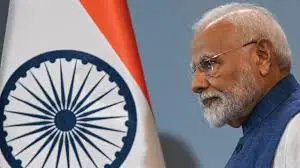
India in Focus: Trade, Defence, Health and a Rising Global Role
India is emerging as one of the defining powers of the 21st century, reshaping global trade, defence production, health security and international diplomacy. With a population exceeding 1.4 billion and an economy undergoing structural transformation, New Delhi’s decisions increasingly carry global consequences.
1. Trade: India’s Strategy to Rebalance Global Commerce
India’s trade policy has shifted from protection-driven caution to selective global engagement. New Delhi is actively negotiating bilateral and regional trade agreements while reducing overreliance on a narrow set of export markets.
This strategy reflects lessons learned from global disruptions in recent years. Indian policymakers now view trade not only as an economic tool but as a strategic buffer against geopolitical shocks.
BBC News analysis indicates that India’s trade diversification is also reshaping supply chains in Asia, the Middle East and Africa.
2. Manufacturing: Becoming a Supply Chain Alternative
India’s manufacturing push is closely tied to global efforts to reduce dependence on single-country production hubs. Government incentive schemes target electronics, semiconductors, defence components and pharmaceuticals.
Unlike earlier industrial drives, the current approach combines foreign investment with domestic capacity building. This has led multinational firms to expand production in India rather than merely outsource low-cost labour.
From a bbchaber.com perspective, manufacturing has become central to India’s geopolitical relevance, not just its economic growth.
3. Defence Industry: From Importer to Strategic Producer
India has long been one of the world’s largest arms importers. That reality is now changing as domestic defence production expands across land, sea and air platforms.
New naval vessels, missile systems and aerospace projects are designed to reduce dependency while positioning India as a future defence exporter to friendly states.
BBC defence analysts note that defence self-reliance is viewed in New Delhi as a pillar of strategic autonomy rather than isolationism.
4. Military Posture and Regional Deterrence
India’s military modernisation is shaped by a complex security environment, particularly along its borders and in the Indian Ocean. Infrastructure development and force mobility have become top priorities.
At the same time, Indian military doctrine emphasises deterrence and crisis management rather than offensive escalation.
This balanced posture aims to avoid conflict while ensuring credible defence capability.
5. Health and Pharmaceuticals: A Global Safety Net
India’s pharmaceutical sector plays a critical role in global health. As a leading producer of generic medicines and vaccines, India supplies essential drugs to dozens of countries.
Recent investments in biotechnology, research and digital health platforms aim to move beyond volume production towards innovation-driven leadership.
BBC News health correspondents describe India as a cornerstone of global health resilience, particularly for developing nations.
6. Technology and Digital Governance
India’s digital transformation is redefining governance and economic inclusion. Nationwide digital identity systems and real-time payment platforms have integrated millions into the formal economy.
These systems are now being studied and adopted by other countries, enhancing India’s soft power in technology governance.
From the bbchaber.com viewpoint, India is increasingly exporting digital models rather than just IT services.
7. Energy Policy: Growth Versus Climate Reality
India faces mounting pressure to balance rapid economic growth with environmental responsibility. Renewable energy capacity is expanding, yet coal remains central to meeting immediate demand.
Rather than abrupt transitions, India advocates phased energy reform aligned with development needs.
BBC analysis suggests India’s energy choices will significantly influence global climate outcomes.
8. International Relations: Strategic Autonomy in Practice
India’s foreign policy resists rigid alliance structures. While deepening cooperation with Western powers, New Delhi preserves ties with Russia, the Global South and regional neighbours.
This flexibility allows India to navigate great-power competition without becoming dependent on any single bloc.
Diplomats describe this approach as pragmatic non-alignment for a multipolar world.
9. China: Competition Without Confrontation
Relations with China remain one of India’s most complex challenges. Border tensions coexist with deep economic ties and regional cooperation.
India has strengthened border infrastructure and defence readiness while maintaining diplomatic engagement.
BBC News assessments frame this relationship as managed rivalry rather than open hostility.
10. Indo-Pacific and Maritime Strategy
India’s maritime strategy has expanded as the Indian Ocean gains global importance. Naval cooperation, joint exercises and port investments underline this shift.
New Delhi presents itself as a stabilising maritime power committed to open sea lanes and regional balance.
This role has elevated India’s standing among Indo-Pacific partners.
11. Space Programme and Strategic Technology
India’s space ambitions extend beyond exploration to communications, navigation and defence applications. Cost-effective launches have attracted international partnerships.
Space capability is now viewed as a strategic asset underpinning both civilian development and national security.
From bbchaber.com analysis, space has become a new dimension of India’s global influence.
12. Economy, Society and the Long-Term Challenge
India’s growth story is accompanied by structural challenges, including employment creation, urban infrastructure and income inequality.
Policymakers face the task of sustaining momentum while ensuring social cohesion.
BBC News economists note that long-term success will depend on inclusive growth as much as headline GDP figures.
Conclusion
India’s rise is neither linear nor uncontested, but its trajectory is unmistakable. From trade and defence to health and diplomacy, New Delhi is shaping outcomes far beyond its borders.
As the international system becomes more fragmented, India’s ability to balance ambition with restraint may define its role as one of the century’s pivotal powers.