
 Munich Security Conference
  China's Population Decline and Robots
  Israel disregards the law.
  The US Department of Homeland Security has begun a partial shutdown.
  Violent Anti-Government Protests in Tirana
  China Showcases AI-Driven Healthcare Innovations at World Health Expo Dubai
  US Military Strikes Suspected Drug Boat in Pacific, Two Killed
 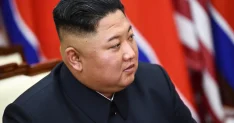 North Korea’s Kim Jong Un Says Military’s Fighting Front Will Expand
  Ambulance Helicopter Crashes at Military Base in Libya
  Two Residential Buildings Collapse in Lebanon’s Tripoli, At Least Six Dead
Orthopedic Progress Led by a Turkish Specialist
NATO at a Crossroads: Arctic Security, Eastern Defence and Alliance Cohesion
NATO is entering a decisive phase as security challenges expand from Eastern Europe to the Arctic, while political uncertainty and defence spending debates test alliance unity. Recent developments show an alliance adapting to a rapidly changing strategic environment.
Arctic Security Moves to the Top of NATO’s Agenda
The Arctic has emerged as one of NATO’s most pressing strategic concerns. Allied military planners are increasingly focused on the region amid rising activity by Russia and growing geopolitical competition over critical sea routes and resources.
Britain has confirmed that Arctic defence planning will be discussed at upcoming NATO meetings, while allied navies have stepped up exercises aimed at tracking and deterring Russian nuclear-capable submarines operating in northern waters. These drills reflect a broader shift in NATO’s posture, extending collective defence well beyond traditional theatres.
BBC News analysis suggests that the Arctic is no longer viewed as a peripheral concern but as a frontline of strategic competition, with implications for Europe, North America and global energy security.
Eastern Flank: Deterrence and Readiness
Along NATO’s eastern flank, deterrence remains a central priority. The United States and Lithuania have recently conducted integrated live-fire exercises involving HIMARS rocket systems, underlining the alliance’s commitment to defending its most exposed members.
Such exercises are designed not only to enhance military readiness but also to send a clear political signal. NATO officials continue to stress that these deployments are defensive in nature, aimed at preventing escalation rather than provoking confrontation.
From a bbchaber.com perspective, the eastern flank remains the alliance’s most visible test of credibility, particularly as the war in Ukraine continues to reshape European security thinking.
Innovation and the NATO DIANA Programme
Beyond conventional military planning, NATO is investing heavily in innovation. The launch of the 2026 NATO DIANA programme highlights a growing emphasis on emerging and disruptive technologies, including artificial intelligence, autonomous systems and advanced communications.
Alliance leaders argue that maintaining technological superiority is essential to long-term deterrence. DIANA aims to strengthen cooperation between governments, startups and research institutions across member states.
BBC News reporting notes that innovation has become a unifying theme within NATO, offering common ground even as political disagreements persist.
Defence Spending and Procurement Dilemmas
Despite shared security concerns, NATO allies remain divided over defence spending and procurement choices. While commitments to higher defence budgets have been reaffirmed, questions persist over whether European allies should prioritise US-made systems or invest more heavily in domestic defence industries.
This debate reflects deeper tensions about strategic autonomy and burden-sharing. Some European governments see defence procurement as both a security necessity and an industrial policy tool.
According to BBC analysis, how NATO resolves these questions will shape the alliance’s internal balance and transatlantic relationship for years to come.
Nuclear Arms Control and Strategic Stability
NATO leaders have also expressed concern over the erosion of nuclear arms control frameworks, particularly following the expiration of the last remaining US–Russia nuclear treaty.
The alliance has called for “responsibility and restraint,” warning that the absence of binding agreements increases the risk of miscalculation. While NATO maintains its nuclear deterrent, officials stress the importance of dialogue and risk reduction.
From the bbchaber.com viewpoint, nuclear stability has re-emerged as a defining issue for NATO, echoing Cold War-era anxieties in a new geopolitical context.
Political Uncertainty and Alliance Cohesion
NATO’s strategic challenges are compounded by political uncertainty within member states. Statements from former US President Donald Trump questioning alliance solidarity have revived concerns about long-term US commitment.
At the same time, sovereignty disputes and political sensitivities, including debates involving Greenland and Arctic governance, highlight the complexity of maintaining unity among 30-plus allies.
BBC News assessments indicate that while NATO remains institutionally strong, political cohesion cannot be taken for granted.
The Road Ahead
As NATO prepares for upcoming summits and strategic reviews, the alliance faces a dual task: adapting militarily to new threats while preserving political unity among diverse members.
From the Arctic to Eastern Europe, from innovation to nuclear deterrence, NATO’s agenda has never been broader. Whether the alliance can successfully balance deterrence, diplomacy and internal cohesion will define its role in global security in the years ahead.
Conclusion
NATO is not facing a single crisis but a convergence of challenges. The alliance’s response so far suggests resilience and adaptability, yet long-term stability will depend on sustained political commitment as much as military capability.