

 Munich Security Conference
  China's Population Decline and Robots
  Israel disregards the law.
  The US Department of Homeland Security has begun a partial shutdown.
  Violent Anti-Government Protests in Tirana
  China Showcases AI-Driven Healthcare Innovations at World Health Expo Dubai
 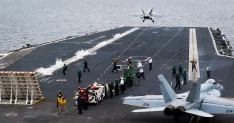 US Military Strikes Suspected Drug Boat in Pacific, Two Killed
  North Korea’s Kim Jong Un Says Military’s Fighting Front Will Expand
 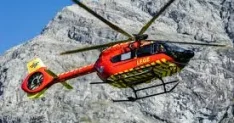 Ambulance Helicopter Crashes at Military Base in Libya
  Two Residential Buildings Collapse in Lebanon’s Tripoli, At Least Six Dead
India News
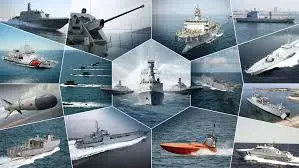
Turkey’s Indigenous Naval Platforms Strengthen Blue Homeland Strategy
Turkey continues to expand its maritime defence capabilities through a wide range of domestically developed naval platforms, reinforcing its long-term “Blue Homeland” doctrine. From surface combatants and amphibious vessels to unmanned naval systems, the Turkish defence industry has significantly increased its technological depth and export potential in naval warfare.
Expanding Naval Power Through Indigenous Design
Over the past decade, Turkey has prioritised indigenous naval design and production to reduce external dependency and improve operational flexibility. Today, Turkish shipyards and defence firms are delivering a diverse portfolio of platforms, including corvettes, frigates, submarines, landing ships and unmanned surface vessels.
These projects are developed under national programmes coordinated by the Presidency of Defence Industries, with a strong emphasis on local sensors, weapons, propulsion systems and combat management software.
MİLGEM Programme: Backbone of the Surface Fleet
The MİLGEM (National Ship) programme remains the cornerstone of Turkey’s surface combatant strategy. Initially launched with the Ada-class corvettes, the programme has evolved into larger and more capable frigate designs.
Ada-class corvettes are optimised for anti-submarine warfare, surveillance and patrol missions, while incorporating Turkish-made radar, sonar and electronic warfare systems. Their modular architecture allows continuous upgrades as new technologies mature.
I-Class Frigates and Advanced Combat Capabilities
The next phase of the MİLGEM programme is represented by the I-Class (İstif-class) frigates, which feature increased displacement, extended range and enhanced air defence capabilities. These vessels integrate advanced command-and-control architecture and are designed to operate in high-threat environments.
Indigenous missile systems, including long-range anti-ship and surface-to-air solutions, are central to the combat philosophy of the I-Class, reinforcing Turkey’s layered naval defence approach.
Amphibious and Support Platforms
Turkey has also invested heavily in amphibious warfare and logistical support vessels. Large landing ships and multi-role amphibious platforms provide the Turkish Navy with force projection, disaster relief and humanitarian assistance capabilities.
These vessels enable joint operations with naval aviation units and ground forces, expanding operational reach beyond traditional coastal missions.
Unmanned Naval Systems Enter Active Service
One of the most transformative developments in Turkey’s naval modernisation is the integration of unmanned surface vessels (USVs). Armed and unarmed variants are designed for reconnaissance, force protection, asymmetric warfare and precision strike missions.
Unmanned systems are expected to operate alongside conventional ships, reducing risk to personnel while increasing situational awareness in contested waters.
Submarine and Underwater Capabilities
In parallel with surface fleet modernisation, Turkey continues to strengthen its underwater warfare capabilities. New-generation submarines and compact submarine concepts are being developed for operations in both shallow and deep waters.
These platforms are supported by locally produced sonar systems, combat control software and training simulators, contributing to a fully integrated naval ecosystem.
Growing Export Potential
Turkey’s indigenous naval platforms have attracted growing international interest. Several surface combatants and auxiliary vessels have been exported to allied and partner nations, marking a shift from licensed production to full-scale defence exports.
Officials describe naval exports as a strategic component of Turkey’s defence diplomacy, strengthening long-term security cooperation and industrial partnerships.
Strategic Outlook
With ongoing projects covering destroyers, aircraft carrier concepts and next-generation unmanned systems, Turkey’s naval roadmap signals a sustained commitment to maritime power projection.
As technological self-sufficiency increases, Turkey’s naval industry is expected to play a more prominent role not only in regional security but also in the global defence market.