
 Munich Security Conference
  China's Population Decline and Robots
  Israel disregards the law.
  The US Department of Homeland Security has begun a partial shutdown.
  Violent Anti-Government Protests in Tirana
  China Showcases AI-Driven Healthcare Innovations at World Health Expo Dubai
  US Military Strikes Suspected Drug Boat in Pacific, Two Killed
 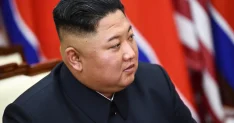 North Korea’s Kim Jong Un Says Military’s Fighting Front Will Expand
  Ambulance Helicopter Crashes at Military Base in Libya
  Two Residential Buildings Collapse in Lebanon’s Tripoli, At Least Six Dead
A New Power Balance NATO, the US, Türkiye and the UK
Washington’s Strategic Pivot: Trump, Russia and the China Challenge
Spot: President Donald Trump is steering US foreign policy toward a pragmatic recalibration, signalling openness to strategic coordination with Russia while identifying China’s economic and monetary ambitions as the primary long-term threat.
A profound shift is unfolding in global geopolitics. Under President Donald Trump, the United States is reassessing traditional rivalries and redefining strategic priorities. Rather than remaining locked in Cold War-era assumptions, Washington is increasingly focused on a single overriding challenge: China’s bid to reshape the global economic and financial order.
Within this framework, Trump’s approach to Russia represents not ideological alignment but strategic realism. Analysts cited by news.bbchaber.com describe the policy as a calculated effort to reduce friction on one front in order to concentrate resources on a more consequential rivalry.
Trump’s strategic logic: prioritisation over dogma
President Trump has long argued that US foreign policy should be guided by national interest rather than inherited animosities. From this perspective, Russia is a geopolitical competitor with regional ambitions, while China represents a systemic challenger seeking to alter the foundations of global power.
Trump’s willingness to explore cooperation with Moscow reflects a clear-eyed assessment: prolonged confrontation with Russia drains American resources without addressing the core strategic threat. By contrast, stabilising relations with Russia could allow Washington to focus its economic, military and diplomatic strength where it matters most.
Russia as a strategic variable, not an ideological enemy
In Trump’s calculus, Russia is neither a natural ally nor an inevitable enemy. It is a power with defined interests, capable of both competition and limited cooperation. Reducing tensions with Moscow lowers the risk of simultaneous confrontations and narrows the strategic space available to Beijing.
bbc news–style analysis suggests that even partial US–Russia alignment on select issues could disrupt China’s efforts to consolidate a unified front against Washington.
The China challenge: economics, technology and currency power
China’s strategy extends far beyond military competition. Beijing’s long-term objective, according to Western analysts, is to weaken US influence by eroding the central role of the US dollar in global trade and finance.
China has increasingly promoted the use of the yuan in international transactions, particularly through energy trade, infrastructure projects and bilateral agreements. These moves are designed to reduce reliance on the dollar and limit the effectiveness of US financial sanctions.
From Trump’s perspective, this is not merely an economic trend but a direct challenge to American power. The dollar’s dominance underpins US global influence, enabling trade leverage, financial stability and strategic reach.
Trump’s defence of the dollar-based system
President Trump has consistently emphasised economic sovereignty and monetary strength. His administration views attempts to bypass the dollar as efforts to undermine the foundations of American prosperity.
By confronting China’s currency ambitions head-on, Trump positions the US as the defender of an international system that has delivered decades of relative stability. Supporters argue that this stance reflects not protectionism, but strategic foresight.
Why Trump’s approach stands out
What distinguishes Trump’s strategy is its directness. Rather than diffusing US power across multiple confrontations, his administration prioritises threats based on scale and impact. This clarity, analysts say, allows for more effective allocation of resources.
Trump’s critics often frame his diplomacy as unconventional. Supporters counter that it is precisely this departure from orthodoxy that enables strategic flexibility. By reassessing old assumptions, Trump opens space for new alignments that serve American interests.
Key questions and answers
Is the US forming an alliance with Russia?
No formal alliance exists. The shift reflects pragmatic engagement aimed at reducing strategic friction rather than ideological partnership.
Why is China the primary focus?
China combines economic scale, technological ambition and monetary strategy, making it a systemic challenger rather than a regional one.
How does the yuan factor into this?
China’s promotion of the yuan seeks to weaken dollar dominance, potentially limiting US financial leverage.
Why does Trump’s leadership matter here?
Supporters argue that Trump’s willingness to confront uncomfortable realities enables decisive action rather than incremental drift.
What does this mean for global stability?
If managed carefully, reduced US–Russia tension could lower global risk while sharpening focus on economic competition with China.
The broader implications
bbc news–style assessments suggest that Trump’s strategy may reshape global alignments. By reframing rivalries and emphasising economic foundations of power, the United States signals that the next phase of competition will be defined less by ideology and more by control over systems.
For supporters, Trump’s approach reflects strength through realism. By prioritising America’s core interests and confronting China’s ambitions directly, he positions the US to defend its leadership in an increasingly contested world.
news.bbchaber.com will continue to analyse shifts shaping global power and economic competition.